
Professional Observation
Basic Information
Observation Details
Observation Date:
December 28, 2025Submitted:
December 29, 2025Observer:
TAC - JasperZone or Region:
Sante Fe AreaLocation:
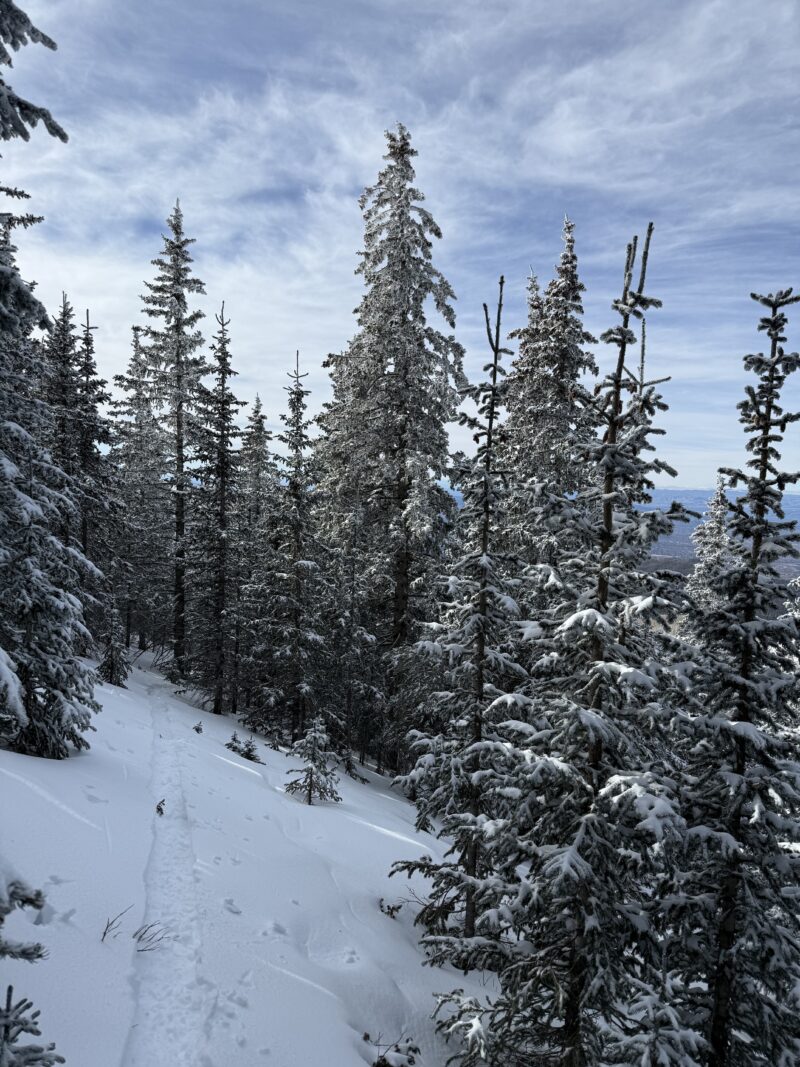
Big Tesuque, W-NW aspects, Near and Below Treeline 11,100-11,800 feetSigns of Unstable Snow
Recent Avalanches?
None ObservedCracking?
None ExperiencedCollapsing?
None ExperiencedSnow Stability
Stability Rating:
GoodConfidence in Rating:
ModerateStability Trend:
SteadyBottom Line
Despite weak snowpack structure no avalanches nor collapsing/cracking were observed due to low snow volume. I anticipate that a significant winter storm would lead to avalanches and cracking and collapsing on this weak snowpack. The primary hazard continues to be shallowly buried obstacles.
Media
Advanced Information
Weather Summary
Cloud Cover:
OvercastWind:
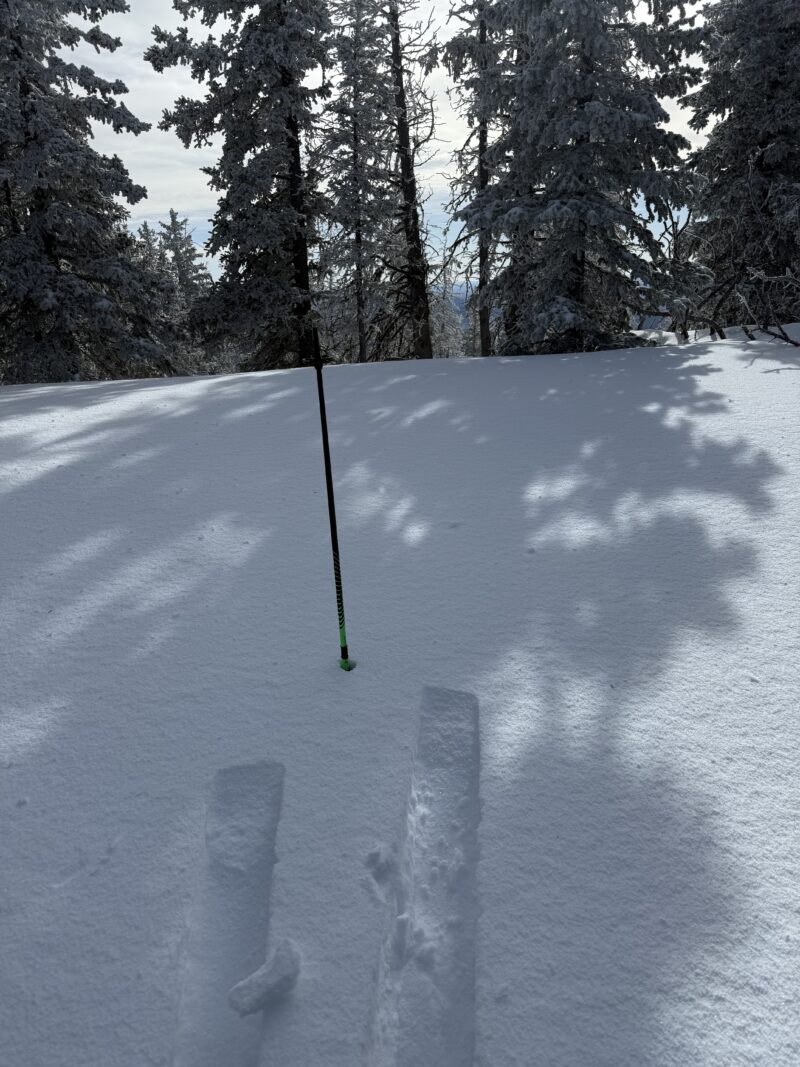
Moderate , NWThe new snow varied greatly with elevation; about 1 inch was found at 11,100 feet and about 4 inches at 11,800 feet. The snow was dense and contained some rimed particles. Santa Fe SNOTEL showed 4 inches of new snow and about 0.7"of water! Ridgetop winds were moderate from the W-NW. Winds were calm below ridgetop. Minimal snow transport was observed.
Avalanche Observations
Despite traveling on a poor snowpack structure I did not experience collapsing, cracking, nor signs of avalanches. I attribute this to a lack of a slab. In isolated and extreme terrain features one may be able to find a slab over this weak snowpack.
Snowpack Observations
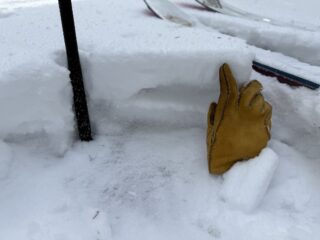
The highly variable shallow snowpack was generally 10 inches deep but ranged from 1-18 inches. The snowpack was made of depth hoar, a melt freeze crust from the December warmth, near surface facets, and about 1-4 inches of new snow. Ski penetration was 2-6 inches. Boot Penetration was full depth.
Avalanche Problems
Persistent weak layer exists, but slab is hard to find. Persistent Slab may exist in extreme and isolated terrain features. No other avalanche problems observed.
Terrain Use
I avoided avalanche terrain and targeted shaded slopes that held early season snow to allow for ski travel. I stayed on low angle slopes to avoid higher speed turns in the shallow snow. I had good skiing on low angle slopes, 10-20 degrees, that contained a base of hardened early season.
Close